
Underfloor heating completely changes how a home feels. The warmth underfoot creates a sense of comfort that radiators simply cannot replicate, particularly during colder months when tiled spaces such as bathrooms, kitchens and open-plan living areas can otherwise feel cool underfoot.
While the heating system itself is important, the tiles you choose have a major impact on how effectively the entire system performs.
Why Porcelain and Natural Stone Work Best
Not all flooring materials respond to heat in the same way. Porcelain and natural stone are among the best choices for underfloor heating because they conduct and retain heat exceptionally well. Once warmed, they hold the temperature consistently and distribute heat evenly across the floor, helping create a more comfortable and energy-efficient space.
- Porcelain tiles – especially popular due to their durability, low maintenance and excellent thermal conductivity. They heat up efficiently and work beautifully in bathrooms, kitchens, hallways and larger open-plan areas.
- Natural stone – performs exceptionally well while adding texture, character and a softer, more organic feel to a space.
Tile Size Can Affect Heat Performance
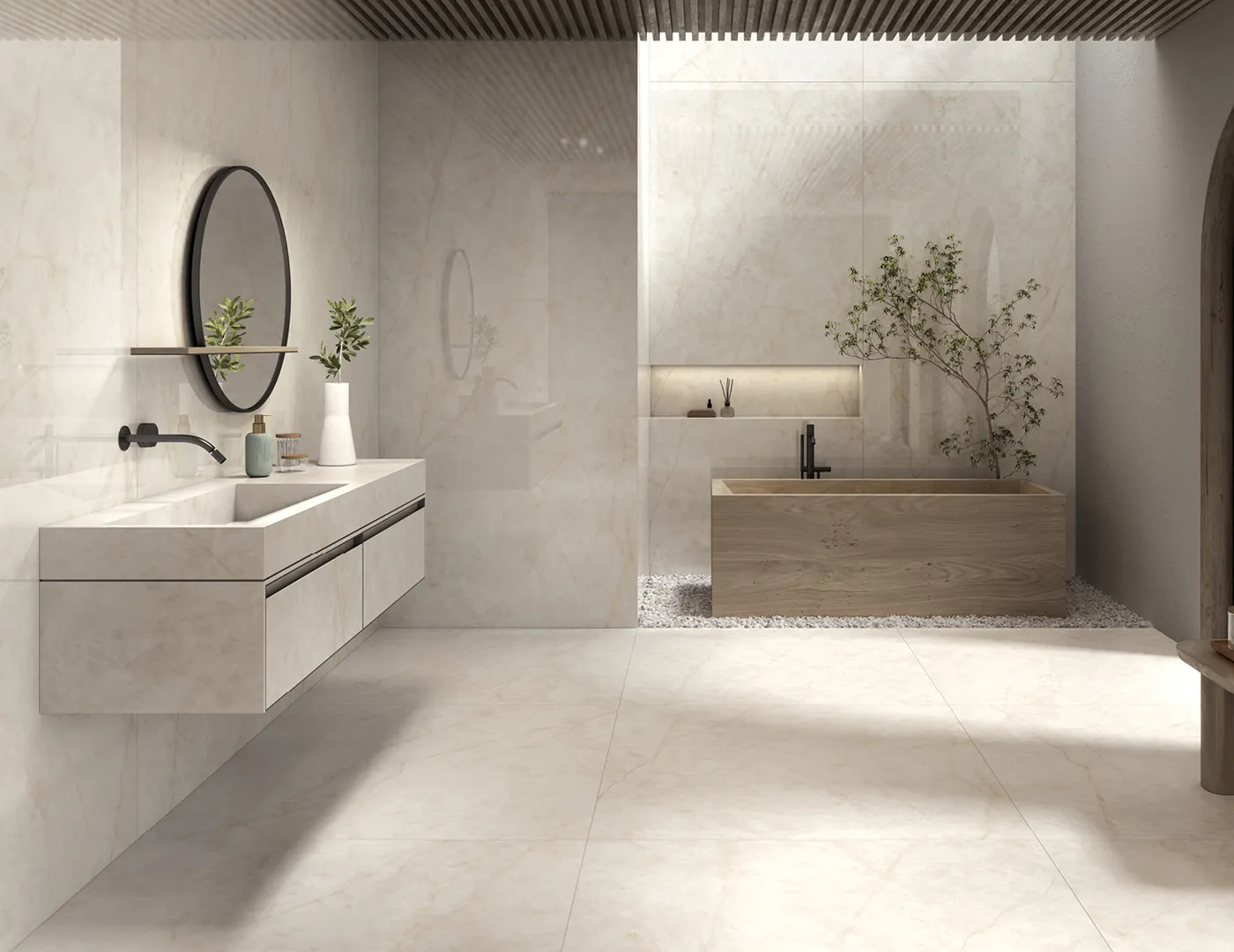
Tile size also plays an important role in how effectively underfloor heating works. Larger format tiles are often preferred because they create fewer grout lines and allow heat to transfer more evenly across the floor surface. They also help create a cleaner and more seamless appearance throughout the room — particularly effective in open-plan spaces where continuity and flow are important to the overall design.
Tile Thickness Matters Too
Tile thickness is another detail that is often overlooked. Very thick materials can take longer to warm up, while thinner porcelain tiles tend to respond more quickly to temperature changes. Finding the right balance between aesthetics, durability and thermal performance is an important part of the planning process.
Room Layout Should Be Planned Alongside the Heating System
The layout of the room can also influence how heat moves throughout the space. Furniture placement, z